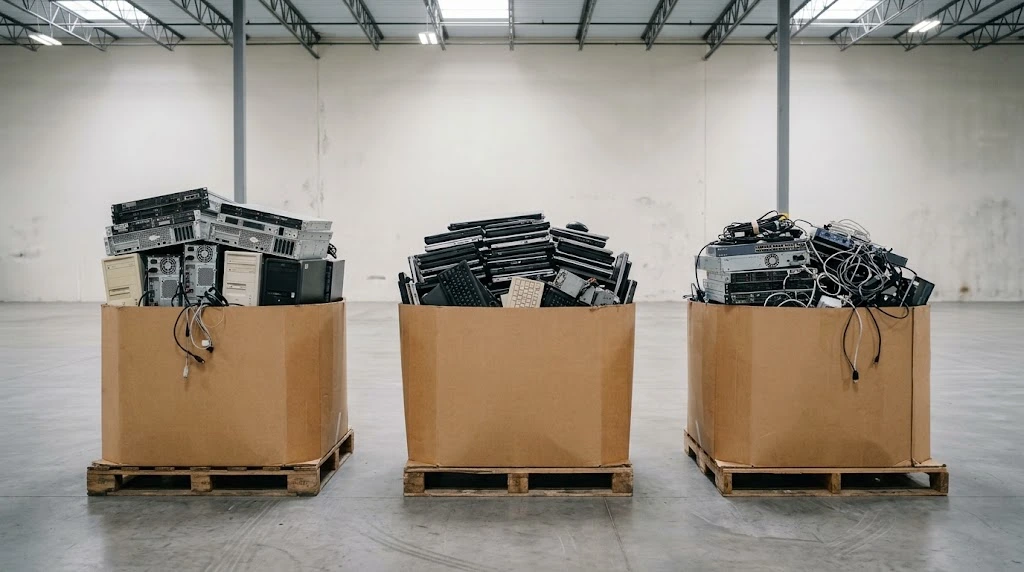
Electronic waste is the fastest-growing solid waste stream in the world, and the gap between what is generated and what is properly recycled is widening. The most authoritative figures come from the Global E-waste Monitor, published by the UN Institute for Training and Research and the International Telecommunication Union. Its 2024 edition is the baseline every policy discussion now uses.
The headline figures
- 62 million tonnes of e-waste generated worldwide in 2022, up 82 percent from 2010.
- 22.3 percent of that was documented as formally collected and recycled.
- 82 million tonnes projected by 2030 if current trends continue, with the documented recycling rate expected to fall to around 20 percent as generation outpaces infrastructure.
- $62 billion worth of recoverable metals, including copper, gold, iron and rare earths, embedded in the 2022 total, most of it lost to landfill, informal recycling or stockpiles.
- Generation is rising by about 2.6 million tonnes per year.
Where it comes from
By weight, small equipment (toasters, cameras, toys, cables) and large equipment (appliances, solar panels) dominate. Temperature exchange equipment, screens and monitors, and small IT devices make up the rest. Per person, Europe and the Americas generate the most, at roughly 17 kg and 14 kg per capita respectively, while Africa generates under 3 kg but recycles least.
In the United States, the picture is complicated by the absence of a federal e-waste law. Twenty-five states and the District of Columbia have their own electronics recycling statutes, most built around manufacturer take-back. Coverage, scope and enforcement vary widely, and commercial IT equipment is often outside the residential programs entirely.
Why the recycling rate is low
Three structural problems explain most of the gap.
Collection. Devices are small, valuable to hold onto, and easy to throw in the trash. Drawer storage of old phones and laptops is a documented phenomenon in every survey.
Processing cost. Modern devices are glued, miniaturized and chemically complex. Recovering metals economically requires scale and sophisticated separation, and the value of a single device rarely covers manual disassembly.
Informal and illegal flows. A significant share of e-waste from wealthy countries is exported, legally or not, to regions where it is processed without environmental controls. The Basel Convention amendments that took effect in 2025 tightened rules on transboundary e-waste shipments, but enforcement lags.
What it means for business
For companies, the relevant numbers are not global tonnage but data risk, compliance exposure and reporting. Retired servers, laptops, phones and point-of-sale hardware carry stored data that must be sanitized or destroyed, and a growing list of state laws and customer contracts require documented chain of custody. Certified ITAD vendors operating under R2v3 or e-Stewards standards, and physical destruction with a certificate of destruction, are the accepted ways to close that loop. Our guide to data center decommissioning covers the process step by step.
There is also money in the stream. Enterprise hardware has resale value for far longer than most IT departments assume, and the precious metal content of circuit boards is high enough that certified recyclers routinely pay for clean loads of boards and processors.
The trajectory
Unless collection and processing capacity grows faster than device sales, the Global E-waste Monitor’s projection of a falling recycling rate will hold. The policy levers that work are the same ones that work for packaging: producer responsibility, convenient collection, and demand for the recovered material. The next edition of the Monitor, expected in 2027, will show whether the EPR expansion of the last three years has moved the needle.
Need a disposal or recycling partner?
Real Zero Waste is published by Wasteless Group, a U.S. inventory destruction, recycling and sustainable disposal company. If you have product, scrap or equipment to move, these are the services:
Disclosure: these services are operated by our publisher. Editorial coverage is not influenced by them.